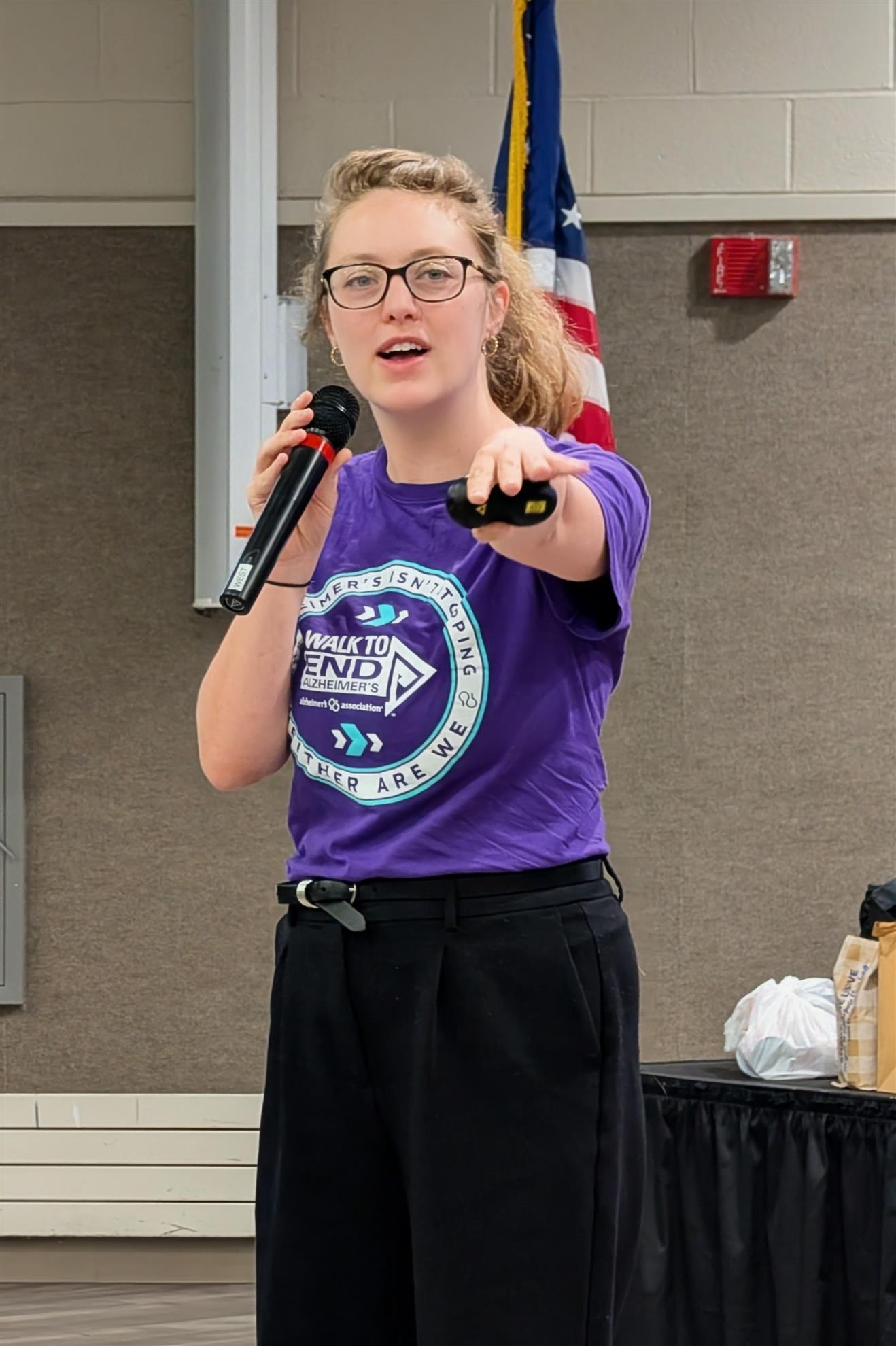
Last Friday, our speaker was Polly Kauffman with the Alzheimer’s Association.
Polly Kauffman, Walk Director for the Cleveland Alzheimer’s Association, spoke about developments in Alzheimer’s research, early detection, brain health, and the resources available to individuals and families affected by dementia.
She explained that the Alzheimer’s Association has traditionally focused on care and support, but its work now increasingly includes treatment, early detection, and preventive brain health. Current research is examining blood-based testing that may help identify Alzheimer’s-related markers earlier, allowing patients and families to consider treatment and planning options sooner.
Polly shared several statistics illustrating the scope of the disease. More than 7 million Americans are living with Alzheimer’s, while nearly 13 million family members and friends provide unpaid care. Those caregivers contribute billions of hours of assistance each year, often while balancing employment and other family responsibilities.
She also explained that dementia is an umbrella term covering several conditions. Alzheimer’s is the most common form, but other types include Lewy body dementia and frontotemporal dementia. Some patients may also experience mixed dementia involving more than one type.
A central theme of the presentation was the importance of early detection. Current treatments are generally intended for people in the earlier stages of the disease, making it important to discuss unusual or persistent changes in memory and thinking with a physician.
 Polly outlined several habits supported by research that may help reduce the risk of cognitive decline:
- Control blood pressure.
- Manage diabetes.
- Stay physically active.
- Eat a heart-healthy diet.
- Maintain a healthy weight.
- Get adequate sleep.
- Avoid smoking.
- Protect the head from injury.
- Continue learning and challenging the brain.
- Stay socially and mentally engaged.
She summarized the connection by noting that what is good for the heart is generally good for the brain.
She also noted that some medications address symptoms, while newer treatments are intended to affect the underlying disease process, and that results and suitability vary from person to person.
Members also asked about the availability of blood tests for Alzheimer’s. Polly said some health systems are beginning to use these tests, but access remains limited, in part because Medicare and Medicaid coverage has not yet become widespread. The Alzheimer’s Association is supporting advocacy efforts intended to improve access to diagnostic testing.
The Alzheimer’s Association offers free educational programs, support groups, a 24-hour helpline, community resource referrals, workplace brain-health programs, and opportunities to participate in clinical or observational research studies.
Our club will again have a team participating in the Walk to End Alzheimer’s on October 17 at the Cleveland Metroparks Zoo. Our club team page is at https://trcs.info/alz and a flyer with registration and donation information is at our ClubRunner site.

 Hunter James' table won the last drawing. There are 33 cards left in the deck, and the queen is worth $507.
 Progressive Field Paul Davis Penant District


